
Have you ever met someone in their fifties who looks remarkably youthful?

- Smooth skin.
- Minimal wrinkles.
- Good skin quality.
- A healthy glow.
And then you’ve probably met someone much younger who appears older than their actual age.
- More lines.
- Duller skin.
- Loss of firmness.
- Premature signs of aging.
It naturally raises an interesting question:
- Why do some people seem to age slowly while others appear to age much faster?
- Is it genetics?
- Luck?
- Expensive skincare?
The answer is both simple and complex.
Because aging is not caused by a single factor it is the result of multiple biological processes happening simultaneously over many years and while we cannot stop aging, science has taught us a great deal about why some people age faster than others.
Aging Starts Earlier Than Most People Think
One of the biggest misconceptions about aging is that it begins when wrinkles appear.
In reality, the aging process starts long before we can see it inside the skin, subtle changes begin occurring as early as our twenties collagen production gradually slows cell turnover becomes less efficient hydration levels begin to decline repair mechanisms become less effective these changes are initially invisible the mirror doesn’t reveal them immediately.
But year after year, they accumulate eventually, they become visible on the surface what we call aging is often the result of biological changes that have been quietly developing for decades.
The Two Types of Skin Aging
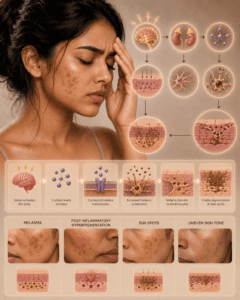
Dermatologists often think about skin aging in two categories.
Intrinsic Aging
This is the natural aging process determined largely by genetics it is the aging that would occur even if you lived in a perfectly controlled environment.
- Collagen gradually decreases.
- Elasticity slowly declines.
- Cellular repair becomes less efficient.
This process is unavoidable.
It is part of being human.
Extrinsic Aging
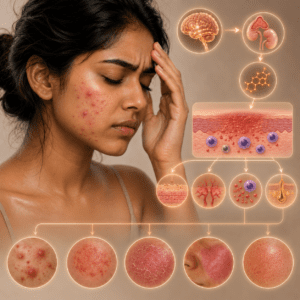
This is aging caused by external influences.
And surprisingly, this is often where the biggest differences between people appear.
External factors include:
- Sun exposure.
- Smoking.
- Pollution.
- Stress.
- Poor sleep.
- Diet.
- Lifestyle choices.
These influences can dramatically accelerate visible aging.
In many cases, they contribute more to appearance than genetics alone.
The Sun Is the Biggest Aging Factor
If there is one reason some people age faster than others, it is often sunlight.
Ultraviolet radiation damages collagen and elastin fibers within the skin over time, this damage accumulates the process is known as photoaging signs of photoaging include:
- Wrinkles.
- Pigmentation.
- Loss of elasticity.
- Uneven skin tone.
- Rough texture.
- Visible blood vessels.
What makes photoaging particularly challenging is that it develops slowly.
The skin remembers years of exposure even when the effects are not immediately visible many studies suggest that a large portion of visible facial aging is linked to cumulative sun exposure not simply age itself.
The Collagen Story
Collagen is often described as the skin’s support structure imagine a mattress when it is new, it feels firm and supportive over time, the internal structure weakens.
- The surface begins to sag.
- The same thing happens within the skin.
- Collagen provides strength and firmness.
Beginning around the age of thirty, collagen production gradually declines the body also becomes less efficient at repairing damaged collagen.
As collagen decreases:
- Fine lines appear.
- Skin becomes thinner.
- Elasticity declines.
Volume loss becomes more noticeable the speed of this process varies significantly between individuals which is one reason some people appear to age faster than others.
Stress Ages More Than the Mind
Modern life places enormous demands on the body.
- Work pressure.
- Financial concerns.
- Family responsibilities.
- Constant digital stimulation.
- The skin responds to these challenges too.
- Chronic stress increases cortisol levels.
Over time, elevated cortisol may contribute to inflammation and impaired collagen production.
Many patients notice that periods of intense stress are often accompanied by:
- Dull skin.
- Breakouts.
- Increased sensitivity.
- Accelerated signs of aging.
The connection between emotional health and skin health is stronger than many people realize.
Why Sleep Matters So Much
Sleep is one of the body’s most important repair mechanisms during sleep, cellular recovery accelerates.
- Damage accumulated during the day begins to be repaired.
- Collagen synthesis is supported.
- Inflammation is regulated.
When sleep becomes chronically inadequate, these repair processes become less efficient.
The result may include:
- Dull skin.
- Poor recovery.
- Fine lines.
- Increased sensitivity.
- A tired appearance.
This is why sleep is often called the most underrated anti-aging treatment available.
Smoking and Premature Aging
Few lifestyle factors accelerate visible aging as dramatically as smoking.
Smoking reduces blood flow to the skin.
- It increases oxidative stress.
- It damages collagen and elastin.
- It impairs healing.
Over time, the effects become visible through:
- Wrinkles.
- Loss of elasticity.
- Dull complexion.
- Premature aging around the mouth and eyes.
The skin is often one of the first places where the consequences of smoking become visible.
The Role of Nutrition
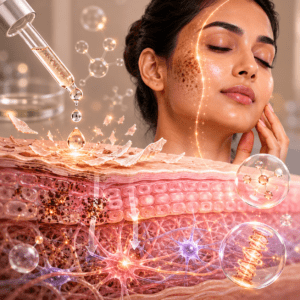
Skin cells constantly require nutrients to repair and maintain themselves.
A balanced diet provides:
- Proteins.
- Healthy fats.
- Vitamins.
- Minerals.
- Antioxidants.
These nutrients support collagen production and protect against oxidative damage.
On the other hand, diets high in processed foods and excessive sugar may contribute to inflammation and collagen damage one process called glycation occurs when sugar molecules bind to collagen fibers, making them weaker and less flexible over time, this can contribute to premature aging.
Genetics Still Matter
It is important to acknowledge that genetics play a role.
- Some people naturally produce collagen more efficiently.
- Some inherit stronger skin structure.
Others are genetically more prone to wrinkles or pigmentation.
However, genetics are not destiny they provide the starting point lifestyle largely influences the journey two people with similar genetics may age very differently depending on how they care for their skin and overall health.
Can Skin Aging Be Slowed?

Aging cannot be stopped.
- No cream.
- No procedure.
- No treatment can pause time.
But science shows that many factors influencing visible aging can be managed.
- Sun protection.
- Good sleep.
- Healthy nutrition.
- Regular exercise.
- Stress management.
- Consistent skincare.
- Professional treatments when appropriate.
Together, these habits can help support healthier, more resilient skin over time.
- The goal is not to avoid aging.
- The goal is to age well.
A Final Thought
When we see someone who appears younger than their age, we often assume they were lucky.
But visible aging is rarely determined by luck alone it is the result of thousands of small decisions made over many years.
- How we protect our skin.
- How we sleep.
- How we manage stress.
- How we nourish our bodies.
- How we care for ourselves.
The skin remembers all of it and perhaps that is the most fascinating thing about skin aging it is not simply a reflection of how many birthdays we have celebrated it is often a reflection of how we have lived.