
If there is one area of the body that frustrates people the most during weight loss, it is the belly.

The number on the scale starts dropping.
- The face looks slimmer.
- The arms become leaner.
- Clothes begin fitting better.
Yet the stomach seems determined to stay exactly where it is.
For many people, this feels unfair.
- They exercise regularly.
- They eat healthier.
- They make sacrifices.
And still, the belly fat refuses to cooperate.
This often leads to a common question:
- “Why is belly fat so difficult to lose?”
The answer has less to do with laziness or lack of willpower and much more to do with biology because not all body fat behaves the same way and belly fat is different.
Not All Fat Is Created Equal
Most people think fat is simply stored energy while that is partly true, modern science has revealed something surprising fat is not just passive storage.
It is actually a biologically active tissue fat cells communicate with the body.
- They release hormones.
- They influence metabolism.
- They affect inflammation.
- They interact with appetite regulation.
In other words, fat is much more complicated than most people realize and belly fat is one of the most biologically active forms of fat in the body.
The Two Types of Belly Fat
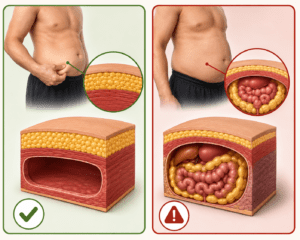
When people talk about belly fat, they often imagine the fat they can pinch.
But there are actually two major types :
Subcutaneous Fat
This is the fat located directly beneath the skin it is the soft fat you can feel around the abdomen while many people dislike its appearance, it is generally less concerning from a health perspective.
Visceral Fat
This is the deeper fat stored around internal organs.
- You cannot pinch it.
- You cannot always see it.
But it may have a much greater impact on health.
Visceral fat surrounds structures such as:
- The liver.
- The intestines.
- The pancreas.
Other abdominal organs and this is where things become important because visceral fat behaves very differently from fat stored elsewhere in the body.
Why Belly Fat Is More Than a Cosmetic Concern

Many people view belly fat purely as an appearance issue.
However, excessive abdominal fat is also associated with several metabolic health concerns.
Research has linked increased visceral fat with:
- Insulin resistance.
- Type 2 diabetes.
- High blood pressure.
- Fatty liver disease.
- Cardiovascular disease.
- Chronic inflammation.
This is one reason doctors often pay close attention to waist circumference, not just body weight two people may weigh exactly the same yet the person carrying more abdominal fat may face different health risks.
The Hormone Connection
One reason belly fat is particularly stubborn involves hormones hormones help determine where the body stores fat and where it prefers to release fat several hormones influence abdominal fat accumulation, including:
- Insulin.
- Cortisol.
- Estrogen.
- Testosterone.
- Growth hormone.
When these systems become imbalanced, the body may preferentially store fat around the abdomen this is one reason why weight gain patterns often change during different stages of life.
The Stress-Belly Fat Relationship
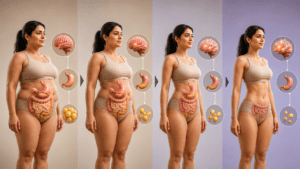
Have you ever noticed that stressful periods often coincide with weight gain?
This is not your imagination chronic stress increases cortisol production cortisol is commonly known as the stress hormone.
In short-term situations, cortisol helps the body respond to challenges however, prolonged elevation may influence appetite and fat storage research suggests that chronic stress may encourage the accumulation of abdominal fat in some individuals this is why managing stress is often an overlooked part of weight management sometimes the issue is not just what we eat it is also what we experience.
Why Belly Fat Often Appears After 30
Many adults notice a frustrating pattern.
- The eating habits that worked in their twenties no longer produce the same results.
- The waistline gradually expands.
- The stomach becomes softer.
- Weight loss becomes slower.
Why?
Because several physiological changes occur with age muscle mass naturally declines daily energy expenditure decreases hormonal changes begin.
Physical activity often reduces due to work and family commitments together, these factors create an environment that favors fat storage—particularly around the abdomen.
Insulin Resistance and Belly Fat
One of the strongest biological links to abdominal fat is insulin resistance insulin is responsible for helping move glucose into cells when cells become less responsive to insulin, the body often compensates by producing more higher insulin levels may make fat loss more difficult particularly around the midsection.
Individuals with insulin resistance often experience:
- Difficulty losing weight.
- Increased hunger.
- Sugar cravings.
- Energy crashes.
- Weight gain around the abdomen.
This is one reason why some people struggle despite making genuine efforts to improve their diet the issue is not simply calories it is also how the body processes and stores energy.
Can You Spot Reduce Belly Fat?
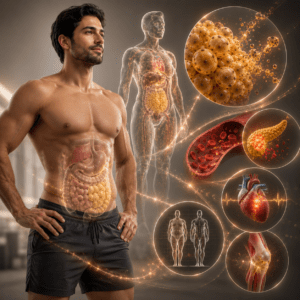
This is one of the most common myths in fitness people perform hundreds of crunches hoping to lose belly fat.
Unfortunately, the body does not selectively burn fat from one specific area fat loss occurs systemically when the body begins using stored energy, it decides where fat is removed from.
Not the exercise abdominal exercises can strengthen muscles.
- They can improve posture.
- They can improve core stability.
- They do not directly target belly fat.
The body follows its own biological rules when deciding where fat reduction occurs.
Why Belly Fat Is Often the Last to Leave
Many people notice that belly fat seems to disappear last.
There is a reason for this the body tends to have preferred fat storage areas these areas are often influenced by genetics and hormones.
- For some individuals, it is the hips.
- For others, the thighs.
- For many, it is the abdomen.
When weight loss begins, the body may reduce fat from multiple locations before significantly reducing stubborn abdominal stores.
This can make progress feel slower than it actually is the scale may be improving health markers may be improving.
Yet visually, the belly changes more gradually.
The Emotional Side of Belly Fat
Perhaps the most difficult part of abdominal weight gain is not physical it is emotional.
Many people feel embarrassed.
- Frustrated.
- Discouraged.
They compare themselves to others they blame themselves for a problem that is often influenced by complex biology the reality is that belly fat is not always a reflection of effort.
It is often the result of genetics, hormones, age, stress, lifestyle, sleep patterns, and metabolism interacting together.
Understanding this does not remove responsibility but it does replace guilt with knowledge.
A Final Thought
Belly fat is difficult to lose because it is biologically different.
It is influenced by hormones.
- Stress.
- Metabolism.
- Insulin sensitivity.
- Genetics.
- Age.
This is why weight loss is rarely as simple as “eat less and exercise more.”
- The body is far more complex than that.
- The good news is that belly fat can improve with the right combination of nutrition, physical activity, sleep, stress management, and appropriate medical guidance when necessary.
- The process may take time.
It may require patience.
But understanding why belly fat behaves differently is often the first step toward overcoming it because lasting weight loss begins not with fighting your body.