

You notice more hair in the shower drain. The hairline looks slightly different in photographs. Your barber casually mentions thinning near the crown. At first, it feels minor. Then suddenly, it becomes difficult to ignore.
Hair loss affects men of all ages, and it’s becoming increasingly common among professionals, entrepreneurs, gym-goers, and young adults across Mumbai. Long work hours, stress, irregular sleep, pollution exposure, hard water, nutritional deficiencies, and genetic factors often combine to accelerate hair thinning.
The emotional impact can be significant. Many men feel less confident during social interactions, become conscious about their appearance in meetings, or worry that hair loss makes them look older than they actually are.
One of the biggest mistakes we see at Brilliance Clinic is men trying random oils, shampoos, supplements, and internet remedies without understanding the actual cause of their hair loss. Effective treatment begins with an accurate diagnosis.
The good news is that modern hair restoration treatments can slow hair loss, improve density, strengthen existing follicles, and in many cases stimulate meaningful regrowth. The key is choosing the right treatment at the right stage.
Why Men Experience Hair Loss
Hair loss rarely happens for a single reason. Most men experience a combination of genetic, hormonal, environmental, and lifestyle influences.
Male Pattern Baldness (Androgenetic Alopecia)
Male pattern baldness remains the most common cause of hair loss in men.
This condition develops due to genetic sensitivity to dihydrotestosterone (DHT), a hormone derived from testosterone. Over time, DHT causes susceptible hair follicles to shrink gradually.
The process is known as follicular miniaturization.
Initially, hair becomes thinner and shorter. Eventually, affected follicles stop producing visible hair altogether.
Typical signs include:
- Receding hairline
- Temple recession
- Crown thinning
- Reduced hair density
- Visible scalp through hair
Many men assume the process is inevitable. While genetics cannot be changed, early intervention can often slow progression significantly.
Stress-Induced Hair Loss
Stress affects the body in more ways than most people realize.
High stress levels can trigger a condition known as Telogen Effluvium. Instead of remaining in the growth phase, large numbers of hair follicles enter the shedding phase prematurely.
Common triggers include:
- Workplace stress
- Financial pressure
- Sleep deprivation
- Emotional trauma
- Illness or surgery
A pattern we frequently observe among corporate professionals in Andheri West and BKC is sudden hair shedding occurring approximately two to three months after a stressful life event.
Nutritional Deficiencies
Hair is a biologically active tissue. It requires adequate nutrition to maintain healthy growth cycles.
Common deficiencies associated with hair loss include:
- Iron deficiency
- Low ferritin levels
- Vitamin D deficiency
- Vitamin B12 deficiency
- Zinc deficiency
- Inadequate protein intake
Many patients maintain normal-looking blood reports while still having suboptimal nutrient levels affecting hair growth.
This is why targeted investigations are often necessary.
Hormonal and Medical Causes
Hair loss may occasionally signal an underlying medical issue.
Potential contributors include:
- Thyroid disorders
- Autoimmune conditions
- Scalp infections
- Chronic inflammatory diseases
- Hormonal imbalances
Ignoring these causes often leads to ineffective treatment because the underlying trigger remains untreated.
Lifestyle Factors
Modern urban lifestyles can accelerate hair thinning.
Contributing factors include:
- Smoking
- Excessive alcohol intake
- Crash dieting
- Poor sleep quality
- Sedentary lifestyle
- Inadequate scalp care
Mumbai’s pollution levels, humidity fluctuations, and hard water exposure may further impact scalp health and hair quality.

Early Signs You Should Never Ignore
Hair loss is generally easier to manage during the early stages.
Unfortunately, many men wait until significant baldness develops before seeking professional advice.
Receding Hairline
Temple recession often represents the earliest visible sign of male pattern baldness.
Increased Hair Shedding
Finding excessive hair on pillows, clothing, or during washing may indicate active shedding.
Visible Scalp Through Hair
Reduced density often becomes noticeable under bright lighting.
Thinning Crown Area
Crown thinning can progress silently because many people don’t regularly inspect the back of their scalp.
Reduced Hair Density
Hair may feel less voluminous even before obvious bald patches appear.
Wider Parting and Sparse Coverage
Progressive follicular miniaturization often creates wider gaps between hair strands.
How Hair Loss Is Diagnosed at Brilliance Cosmocare Clinic
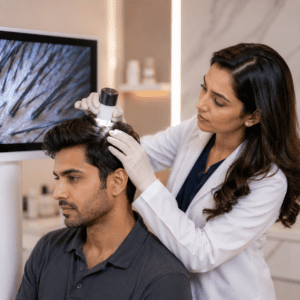
Successful treatment begins with understanding why hair loss is occurring.
Detailed Medical History
We evaluate:
- Family history
- Lifestyle habits
- Medical conditions
- Stress levels
- Nutritional factors
- Previous treatments
Hair & Scalp Examination
A thorough scalp examination provides important clues about the pattern and severity of hair loss.
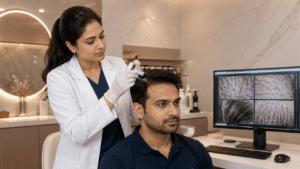
Trichoscopy Assessment
Trichoscopy allows detailed visualization of the scalp and follicles.
This assessment helps identify:
- Miniaturized follicles
- Hair shaft variation
- Scalp inflammation
- Follicular density
Clinical insight:
Many patients believe their hair loss is severe, only to discover through trichoscopy that a large number of follicles remain active and treatable.
Blood Investigations
Investigations may include:
- CBC
- Ferritin
- Iron profile
- Vitamin D
- Thyroid profile
- Vitamin B12
- Hormonal evaluation when indicated
Personalized Hair Loss Mapping
No two patients lose hair in exactly the same way.
Treatment plans are customized according to:
- Cause
- Severity
- Duration
- Age
- Scalp condition
- Hair restoration goals
Best Hair Loss Treatments for Men in Andheri West
There is no universal treatment that works for every individual.
The best hair loss treatment for men in Andheri West depends on the underlying cause, stage of hair loss, follicular health, and long-term goals.
Medical Hair Regrowth Programs
Suitable For
- Early thinning
- Preventive treatment
- Mild hair loss
Benefits
- Reduced shedding
- Improved follicle health
- Slower progression
Expected Timeline
Most patients begin noticing stabilization within 3 to 6 months.
Medical therapy may include dermatologist-prescribed medications, nutritional optimization, scalp therapies, and customized maintenance protocols.
GFC Hair Regrowth Treatment
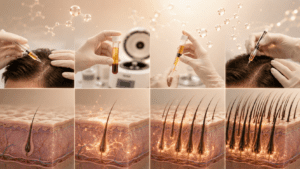
What Is GFC?
Growth Factor Concentrate (GFC) is an advanced regenerative treatment that utilizes concentrated growth factors derived from the patient’s blood.
These growth factors help stimulate weakened follicles and support healthier hair growth cycles.
Suitable For
- Male pattern baldness
- Crown thinning
- Diffuse hair loss
- Early to moderate hair loss
Benefits
- Reduced shedding
- Improved density
- Stronger hair shafts
- Enhanced follicular activity
Treatment Journey
- Consultation
- Scalp mapping
- GFC preparation
- Targeted scalp application
- Progress evaluation
Timeline
- Month 1–2
Reduction in active shedding.
- Month 3–4
Improvement in hair thickness.
- Month 5–6
Visible increase in density.
What most patients don’t realize: Hair regrowth treatments often work best at preserving existing follicles before complete follicular loss occurs.
PRP Hair Treatment
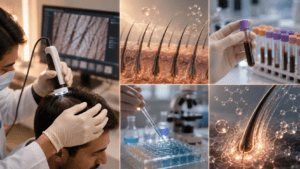
What Is PRP?
Platelet-Rich Plasma (PRP) utilizes growth factors concentrated from a patient’s blood to support hair follicle function.
Benefits
- Improved circulation
- Follicle nourishment
- Better growth cycle support
Ideal Candidates
- Early-stage hair loss
- Diffuse thinning
- Men seeking non-surgical solutions
Timeline
Most treatment plans involve multiple sessions over 3 to 6 months. Research suggests PRP can improve hair density when performed using appropriate protocols and patient selection.
Exosome Hair Regrowth Therapy
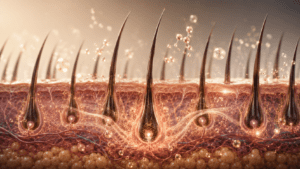
What Are Exosomes?
Exosomes are microscopic signaling particles that facilitate communication between cells.
In hair restoration, they are used to support scalp health and follicular function.
Benefits
- Follicular rejuvenation
- Reduced inflammation
- Improved scalp environment
- Enhanced density
Suitable For
- Moderate hair loss
- Resistant thinning
- Receding hairline
Timeline
- Weeks 1–4
Scalp recovery support.
- Weeks 4–8
Improved follicular activity.
- Months 3–6
Visible density improvements begin appearing many patients from Lokhandwala, Versova, and Oshiwara choose exosome therapy because it involves minimal downtime and fits easily into busy schedules.
Hair Transplant Surgery
When Is Hair Transplant Needed?
Hair transplantation becomes a consideration when significant follicular loss has already occurred.
Ideal candidates generally have:
- Advanced baldness
- Stable donor area
- Realistic expectations
FUE Technique Overview
Follicular Unit Extraction (FUE) involves harvesting individual follicles from donor areas and redistributing them into thinning regions.
Benefits
- Natural-looking hairline
- Permanent follicular redistribution
- Long-term improvement
Recovery Expectations
Most patients resume normal activities within several days, although complete growth develops gradually over months.
Important Reality Check
Hair transplantation is not necessarily the first treatment every man needs many patients achieve substantial improvement through regenerative therapies before surgical intervention becomes necessary.
Which Hair Loss Treatment Is Right for You?
The table below offers a simplified comparison.
| Treatment | Best For | Downtime | Hair Regrowth Potential |
|---|---|---|---|
| Medical Therapy | Early Hair Loss | Minimal | Moderate |
| GFC | Moderate Hair Loss | Minimal | High |
| PRP | Mild-Moderate Hair Loss | Minimal | Moderate |
| Exosomes | Moderate Hair Loss | Minimal | High |
| Hair Transplant | Advanced Baldness | Moderate | Very High |
A common mistake is choosing treatment based solely on popularity. The most effective option is the one that matches your diagnosis and stage of hair loss.
Why Men in Andheri West Choose Brilliance Cosmocare Clinic
Dermatologist-Led Hair Assessments
Every treatment plan begins with a detailed medical evaluation.
Evidence-Based Treatment Plans
Recommendations are based on diagnosis rather than trends.
Advanced Diagnostic Approach
Trichoscopy and clinical assessments help guide treatment decisions.
Customized Hair Regrowth Protocols
No two treatment plans are identical.
Convenient Location Near DN Nagar Metro
Easy accessibility makes follow-up appointments more convenient.
Modern Hair Restoration Technologies
The clinic offers advanced regenerative and medical treatment options under dermatological supervision.
Hair Loss Prevention Tips for Men
Improve Nutrition
Prioritize protein, iron, zinc, and vitamin-rich foods.
Manage Stress
Regular exercise and stress management can reduce excessive shedding.
Prioritize Sleep
Hair growth and repair are closely linked to quality sleep.
Avoid Smoking
Smoking negatively affects circulation and follicular health.
Use Appropriate Hair Care Products
Choose products suitable for your scalp condition rather than marketing claims.
Seek Early Medical Advice
Waiting rarely improves outcomes. Early treatment often preserves more hair.
Key Takeaways
- Hair loss in men is commonly caused by genetics, stress, nutritional deficiencies, or hormonal factors.
- Early intervention generally produces better results than waiting for advanced baldness.
- GFC and Exosome therapies are valuable regenerative options for suitable candidates.
- PRP can improve follicular activity, particularly in early-stage hair loss.
- Hair transplantation is typically reserved for advanced hair loss patterns.
- Accurate diagnosis is often more important than the treatment itself.
- Persistent hair loss should be evaluated by a qualified dermatologist.
Frequently Asked Questions
Is hair loss reversible in men?
Some forms of hair loss can be improved or stabilized when diagnosed early. Results depend on the underlying cause, follicular health, and treatment chosen.
Which is the best hair loss treatment for men?
There is no single best treatment for every individual. The most effective option depends on the cause, severity, and stage of hair loss.
How many sessions are required for hair regrowth treatments?
Most regenerative therapies involve multiple sessions over several months. The exact number varies according to treatment type and clinical response.
Is GFC better than PRP?
GFC contains highly concentrated growth factors and may provide stronger regenerative stimulation in selected patients. Suitability varies between individuals.
Are exosome treatments safe?
When performed by qualified medical professionals using appropriate protocols, exosome therapies are generally considered safe for suitable candidates.
When should I consider a hair transplant?
Hair transplantation is usually considered when significant follicular loss has occurred and sufficient donor hair remains available.
How long does hair regrowth take?
Visible improvements commonly appear between three and six months, although timelines vary.
What is the cost of hair loss treatment in Andheri West?
Costs depend on diagnosis, treatment type, session requirements, and severity. A consultation provides the most accurate estimate.
Can men in their 20s start treatment?
Early intervention is often beneficial. Many patients begin treatment during their twenties to slow progression and preserve existing hair.
Does stress really cause hair loss?
Stress can trigger telogen effluvium and worsen existing hair loss conditions, particularly when combined with poor sleep and lifestyle factors.
Final Thoughts
Hair loss can feel frustrating, but it doesn’t have to be accepted as inevitable. Modern hair restoration treatments offer multiple options for slowing hair loss, strengthening follicles, improving density, and restoring confidence.
The most important step is understanding why hair loss is occurring in the first place. Once the cause is identified, treatment becomes far more targeted and effective.
Whether you’re experiencing early thinning, a receding hairline, crown loss, or more advanced baldness, solutions such as medical therapy, GFC, PRP, Exosome therapy, and hair transplantation can provide meaningful improvement when selected appropriately.
Book a Hair Loss Assessment at Brilliance Cosmocare Clinic, DN Nagar, Andheri West, and receive a personalized treatment plan designed specifically for your hair loss pattern, scalp condition, and long-term goals.