
Improving Uneven Facial Pigmentation and Achieving a More Even Skin Tone
Patient
Priya Nair
Age / Gender
35 Years / Female
Duration
4 Sessions | Approximately 4 Months
Concern
Persistent brown pigmentation across the cheeks, uneven skin tone and noticeable dark patches affecting overall complexion.

Patient Overview
Priya presented with persistent facial pigmentation, particularly across the lateral cheek and mid-face. The affected areas appeared darker than the surrounding skin, creating an uneven complexion. A personalised Melasma Reduction Treatment was planned to gradually minimise pigmentation and restore a more consistent skin tone.
Concern
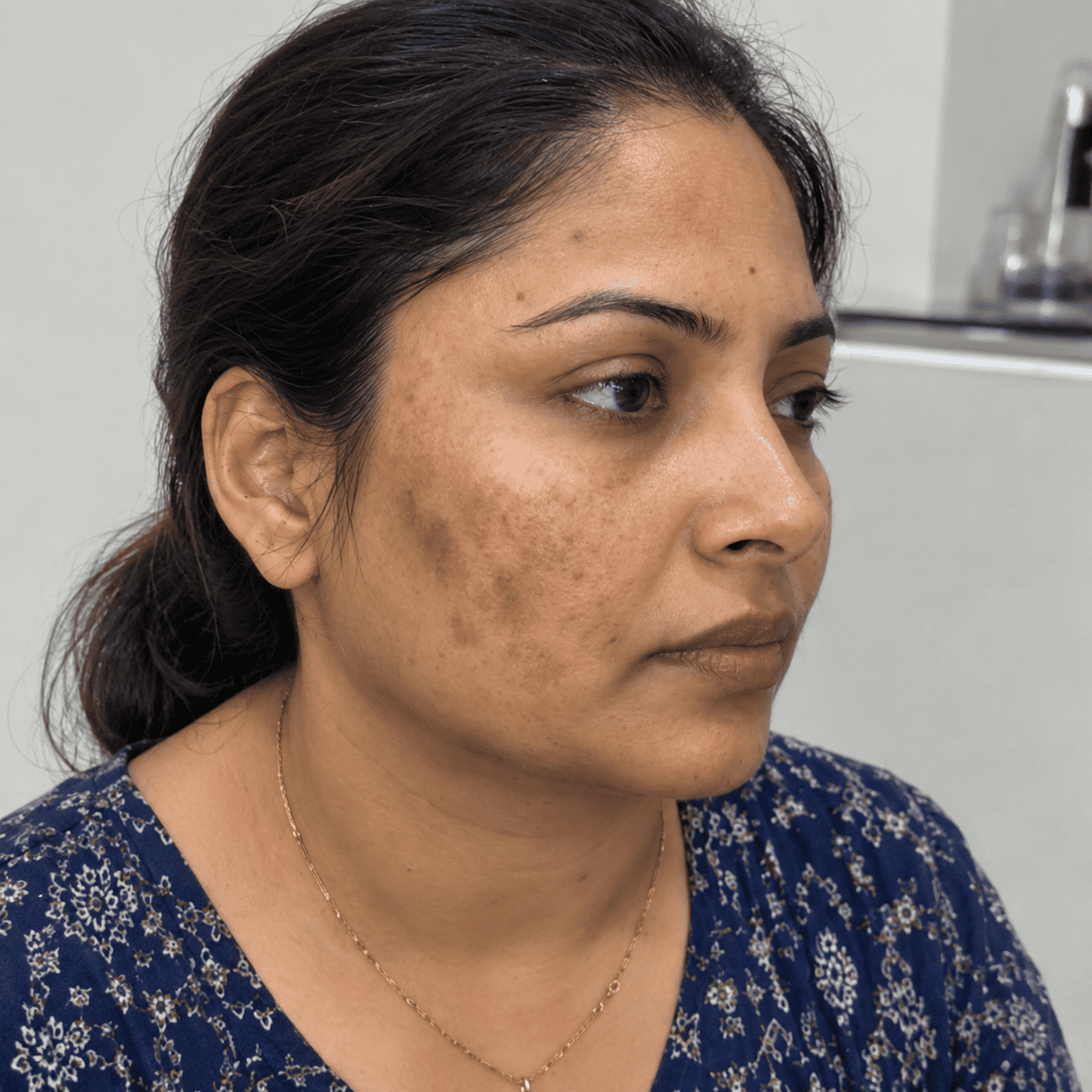
The before photograph shows irregular brown patches concentrated across the cheek, with varying pigmentation intensity. The treatment focused on reducing these darker areas, improving colour consistency and maintaining the skin's natural appearance.
Medical History
No significant medical conditions were reported. The patient underwent a suitability assessment before beginning the pigmentation-reduction programme.
Lifestyle Factors
Sun exposure, hormonal changes, previous pigmentation tendencies and skincare practices may contribute to melasma. Consistent photoprotection and appropriate skincare were considered important for managing pigmentation and reducing recurrence.
Diagnosis Summary
The clinical assessment identified facial hyperpigmentation consistent with melasma, predominantly affecting the cheek region. The treatment objective was to reduce pigmentation intensity, improve complexion uniformity and minimise unnecessary skin irritation.
Clinical Results
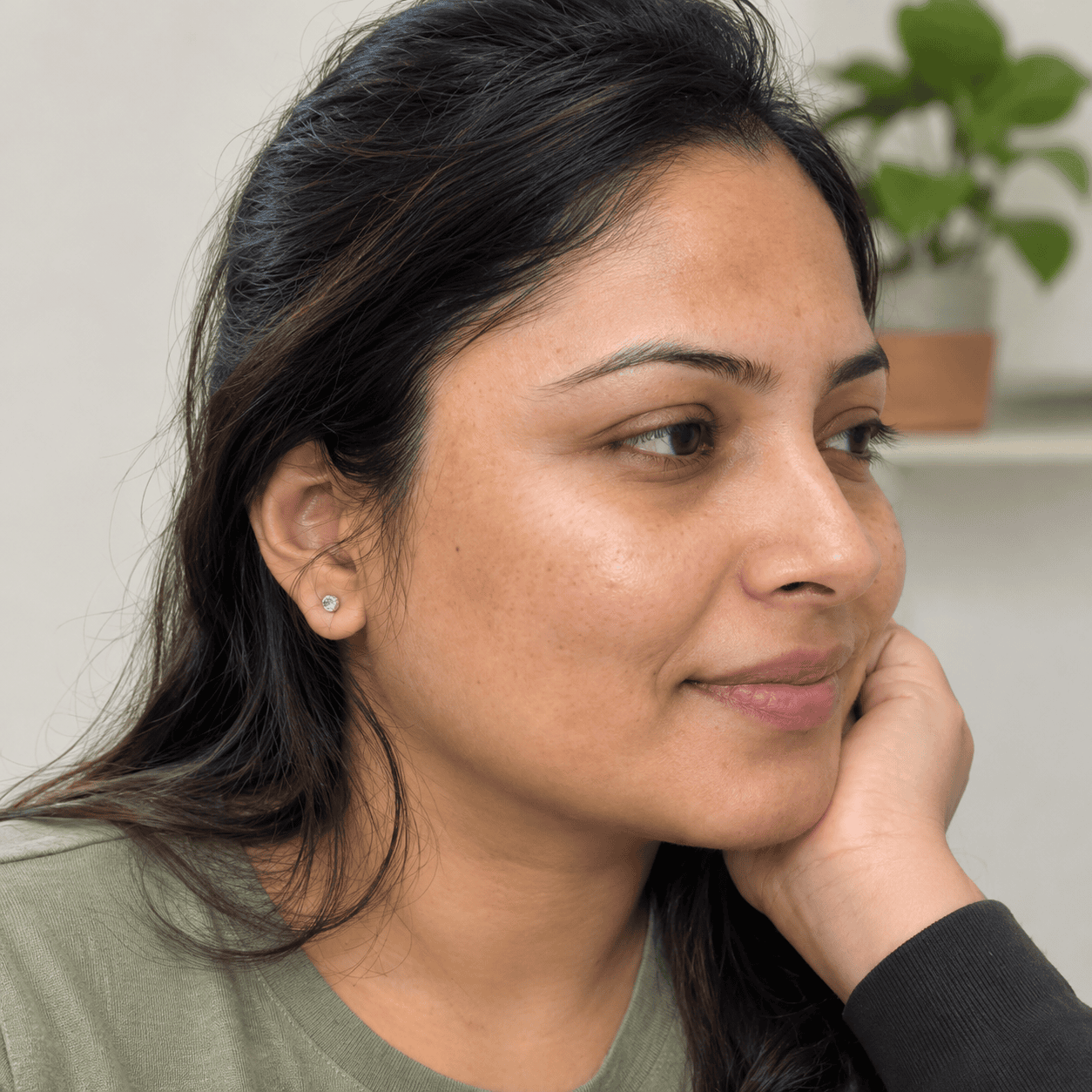
The before-and-after photographs show a substantial visible reduction in cheek pigmentation. Previously prominent brown patches appear lighter, with less contrast between the affected and surrounding areas. The complexion looks more consistent and clearer while retaining its natural skin tone.
Before
After
Treatment Plan
Melasma Reduction Treatment
A physician-supervised pigmentation-management programme was planned according to Priya's skin type, pigmentation pattern and clinical response. The treatment focused on progressively reducing visible melasma while supporting skin-barrier health and limiting inflammation. Appropriate skincare and photoprotection were included to support treatment outcomes and help manage recurrence.
Duration & Frequency
The treatment involved four sessions approximately four weeks apart, with the overall course and result assessment spanning around four months. Improvements were monitored progressively, with attention to pigmentation intensity, skin-tone uniformity and treatment tolerance.

Progress Timeline
Measured Outcomes
Reduced
Cheek Pigmentation
Improved
Skin-Tone Uniformity
Minimized
Dark Patch Visibility
Enhanced
Overall Complexion

Doctor's Clinical Insight
“Melasma requires a gradual and carefully monitored treatment approach. Aggressive pigmentation removal can increase irritation and potentially worsen the condition. My focus is on reducing visible pigmentation while maintaining skin health. Consistent sun protection and appropriate skincare are essential because melasma can recur.”
Dr. Ashok Patel

Patient Experience
“The pigmentation on my cheek had become quite noticeable and was difficult to cover without makeup. I wanted to improve it without making my skin look unnaturally light. The treatment was gradual, and I noticed the darker patches becoming less visible over the following months. By the end of the treatment course, my skin looked much more even, and I felt more comfortable without makeup.”
Priya Nair
Start With a Personalised Beard Assessment
Melasma requires individualised evaluation because pigmentation patterns, skin sensitivity and contributing factors vary between patients. A clinical consultation helps determine treatment suitability, establish realistic expectations and develop a long-term pigmentation-management plan.