
Improving Cheek Pigmentation for a More Even-Looking Complexion
Patient
Kavya Menon
Age / Gender
36 Years / Female
Duration
3 Sessions | Approximately 3 Months
Concern
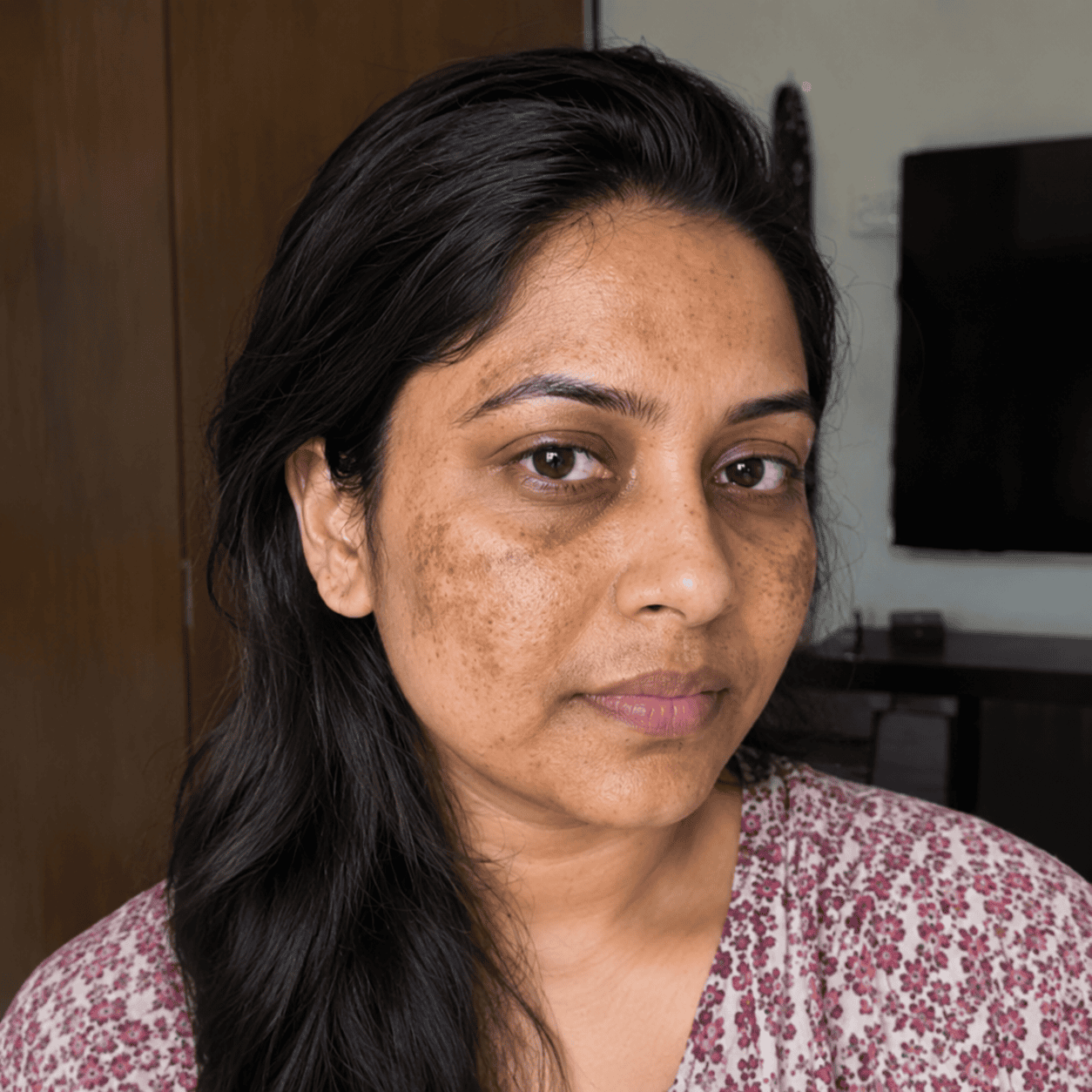
Prominent brown pigmentation across the cheeks and mid-face, creating uneven skin tone and noticeable dark patches.

Patient Overview
Kavya presented with extensive facial pigmentation, particularly across the cheeks, nose and surrounding mid-face region. The initial photograph shows irregular brown patches with varying intensity, contributing to an uneven complexion. A personalised Melasma Reduction Treatment was planned to gradually minimise visible pigmentation while preserving her natural skin tone.
Concern
The before photograph shows scattered brown patches across the cheeks and central facial region, with darker pigmentation particularly noticeable on the left side of the image. The treatment focused on reducing these irregular areas, improving colour consistency and maintaining healthy-looking skin.
Medical History
No significant medical conditions were reported. The patient underwent a suitability assessment before beginning the pigmentation-reduction programme.
Lifestyle Factors
Sun exposure, hormonal influences, individual pigmentation tendencies and skincare practices may contribute to melasma. Appropriate skincare and consistent photoprotection were considered important for controlling pigmentation and reducing the likelihood of recurrence.
Diagnosis Summary
The clinical assessment identified facial hyperpigmentation with a distribution compatible with melasma, predominantly affecting the cheeks and mid-face. The treatment objective was to reduce pigmentation intensity, improve skin-tone consistency and minimise treatment-related irritation.
Clinical Results
The supplied photographs show a substantial visible reduction in facial pigmentation. Previously prominent brown patches appear considerably lighter, particularly across the cheeks and central facial region. The complexion looks clearer and more consistent, with reduced contrast between affected and surrounding skin. The improvement remains natural-looking, although differences in lighting and facial positioning may influence the comparison.
Before

After
Treatment Plan
Melasma Reduction Treatment
A physician-supervised pigmentation-management programme was planned according to Kavya's skin characteristics, pigmentation distribution and treatment response. The approach focused on progressively reducing visible melasma while protecting the skin barrier and avoiding excessive inflammation. Appropriate skincare and photoprotection were incorporated to support improvement and long-term pigmentation management.
Duration & Frequency
The treatment involved three sessions approximately four weeks apart, with the overall course and result assessment spanning around three months. Progress was evaluated through changes in pigmentation intensity, patch visibility and facial skin-tone consistency.

Progress Timeline
Measured Outcomes
Reduced
Cheek Pigmentation
Improved
Skin-Tone Uniformity
Minimized
Dark Patch Visibility
Enhanced
Overall Complexion

Doctor's Clinical Insight
“Melasma responds best to a controlled and individualised treatment approach. The aim is to gradually reduce visible pigmentation while preserving the skin’s natural colour and maintaining skin health. Improvement develops progressively, and consistent photoprotection remains essential because melasma can recur.”
Dr. Ashok Patel

Patient Experience
“The pigmentation on my cheek had become quite noticeable, especially without makeup. I wanted to improve it without making my skin look unnaturally light. The changes happened gradually with each treatment. By the end of the course, the darker patches were much less noticeable, and my skin looked more even overall.”
Kavya Menon
Start With a Personalised Beard Assessment
Melasma requires individualised evaluation because pigmentation patterns, skin sensitivity and contributing factors vary between patients. A clinical consultation helps determine treatment suitability, establish realistic expectations and develop an appropriate long-term pigmentation-management plan.