
Beard Hair Transplant Case Study: Restoring Fuller, More Defined Facial-Hair Coverage
Patient
Rohan Malhotra
Age / Gender
27 years / Male
Duration
1 Session Over Approximately 9 Months
Concern
Patchy beard growth with reduced density over the cheeks and jawline, resulting in an uneven and less-defined beard appearance.

Patient Overview
Rohan presented with sparse and uneven beard growth, particularly across the cheeks and jawline, with limited continuity between the moustache, chin, and lower beard. Beard hair transplantation was selected to improve facial-hair density and coverage while preserving a natural growth pattern.
The primary treatment objectives were to enhance cheek coverage, increase overall beard density, improve moustache-to-beard continuity, define the jawline, and achieve a fuller, natural-looking beard.
Concern
The before photograph demonstrates relatively sparse facial-hair coverage, particularly over the cheeks and lateral lower-face region. The beard appears discontinuous in several areas, with visible skin between individual hair growth zones. The treatment goal was therefore density enhancement rather than creating an excessively thick or artificially uniform beard.
Medical History
No significant medical conditions reported. Patient was assessed for suitability before the planned aesthetic hair-restoration procedure.
Lifestyle Factors
Regular shaving and grooming were part of the patient's routine. No specific lifestyle factor was considered solely responsible for the observed beard density.
Diagnosis Summary
Aesthetic assessment: Uneven facial-hair density with patchy cheek and jawline coverage. The treatment was planned as a cosmetic beard-density restoration procedure.
Clinical Results
Comparison of the before-and-after photographs shows visible improvements in cheek coverage, overall beard density, jawline definition, and continuity between the moustache, cheeks, and chin.
The after photograph demonstrates a fuller, more natural-looking beard, particularly in previously sparse areas. As the images differ in lighting, beard length, and positioning, these findings represent a visual assessment rather than standardized clinical measurements.
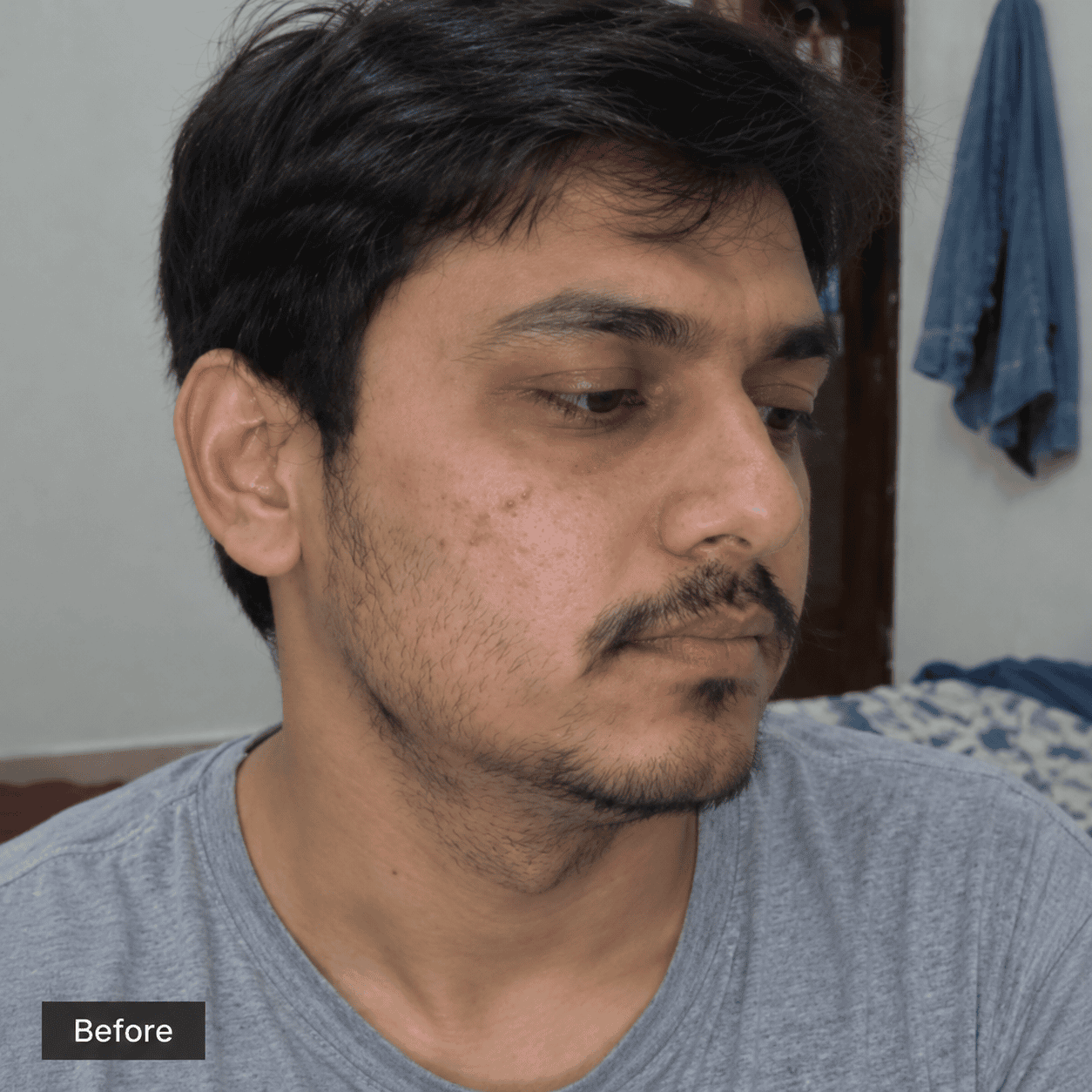
Before
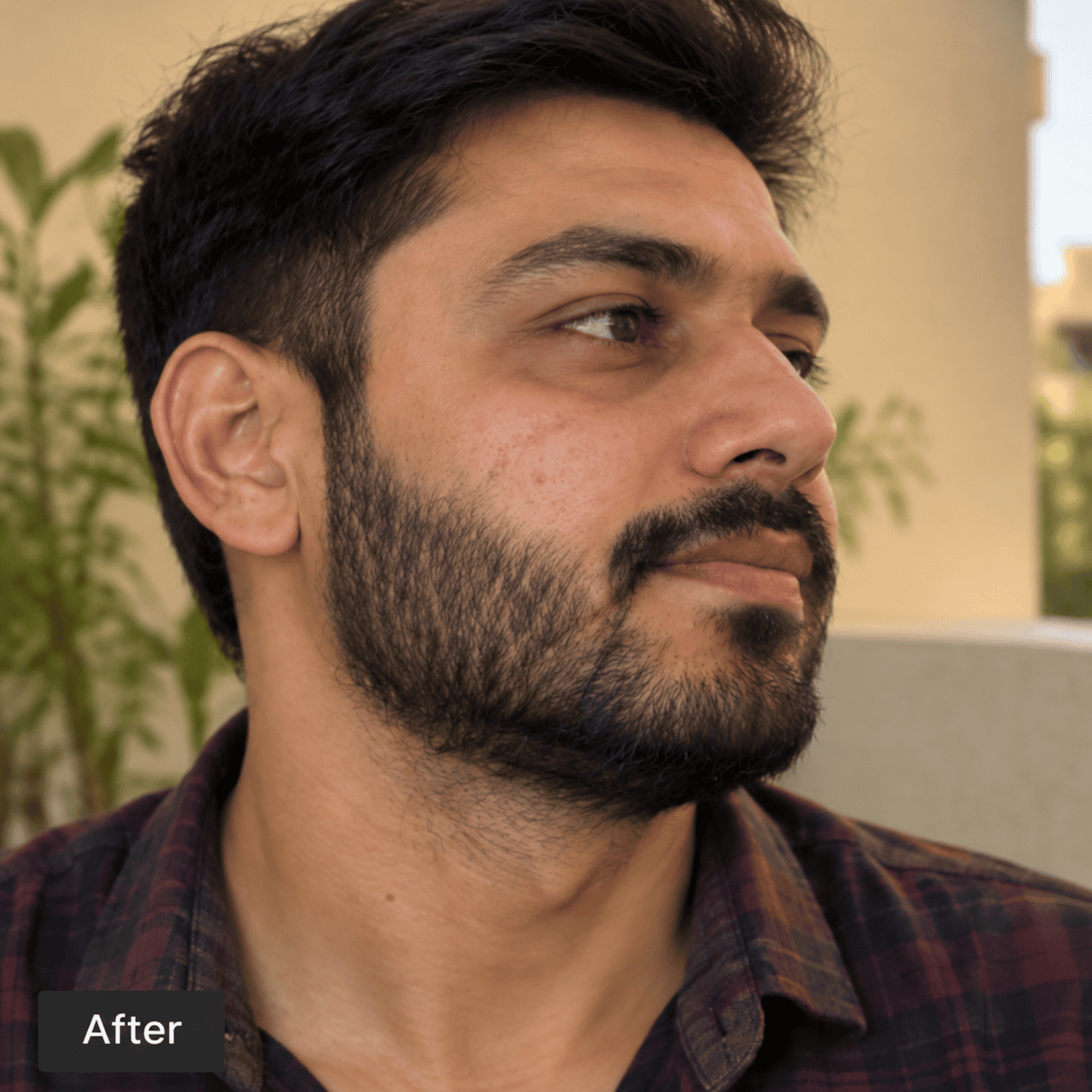
After
Treatment Plan
Beard Hair Transplantation
A beard hair transplant involves transferring suitable follicular units from a donor region to areas with reduced beard density. The transplanted follicles are strategically positioned according to the natural direction, angle, and distribution of facial hair. Particular attention is given to the cheek borders and areas where continuity between different beard regions is limited. For Rohan, the objective was to achieve moderate density enhancement with natural-looking coverage and balanced facial-hair distribution, rather than maximum possible density.
Duration & Frequency
The treatment involved one beard hair transplant session, with an approximate procedure duration of 4–6 hours. A single operative session was performed to address the planned treatment areas. The overall result-development period was approximately 9 months, allowing sufficient time for transplanted follicles to establish growth and gradually mature. The after-treatment photograph appears consistent with a relatively mature result rather than an immediate post-procedure outcome. Since beard growth continues to develop progressively following transplantation, the final appearance should be assessed over several months to evaluate improvements in density, coverage, and natural-looking beard continuity.

Progress Timeline
Measured Outcomes
Balanced
Facial-Hair Distribution
Improved
Cheek Coverage
Defined
Jawline Appearance
Enhanced
Beard Density

Doctor's Clinical Insight
“With beard transplantation, the goal is not simply to place as many follicles as possible. Natural direction, spacing and facial proportions are equally important. For patients with patchy cheek or jawline coverage, carefully planned follicular placement can create a fuller appearance while preserving the natural character of the beard. Patients should understand that maturation takes several months and individual results vary.”
Dr. Ashok Patel

Patient Experience
“My main concern was the uneven growth on my cheeks. Even when I grew my beard longer, some areas still looked quite patchy. The result developed gradually, so I had to be patient during the first few months. By the later stages, the beard looked much more connected and defined, especially around my cheeks and jawline. I feel much more comfortable keeping a fuller beard now.”
Rohan Malhotra
Start With a Personalised Beard Assessment
Acne-related concerns can include active inflammation, post-acne pigmentation, redness, congestion, and textural irregularity.
A proper clinical assessment helps determine whether chemical peels are appropriate, how many sessions may be needed, and what level of improvement is realistic over time.