
For many people, acne is not the hardest part of the journey.

- The scars are.
- The pimples eventually heal.
- The redness settles.
- The breakouts become less frequent.
But every morning, the mirror continues to tell the story of what acne left behind.
- Small pits.
- Uneven texture.
- Dark marks.
Shadows that become more visible under certain lighting.
And for many patients, the emotional impact lasts much longer than the acne itself.
- They avoid close-up photographs.
- They become uncomfortable during video calls.
- They spend extra time trying to hide scars with makeup or filters.
Some even feel that people notice their scars before they notice them the good news is that modern dermatology offers multiple solutions for acne scars the challenge is that treating acne scars in Indian skin requires a different approach than treating scars in lighter skin types and understanding that difference is the key to achieving safe and effective results.
Why Indian Skin Is Unique
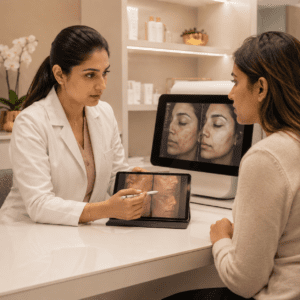
Indian skin is beautiful it naturally contains more melanin than lighter skin types melanin is the pigment responsible for skin color it provides certain advantages, including better natural protection against some effects of ultraviolet radiation however, higher melanin levels also make the skin more reactive to inflammation and injury.
This means that when the skin experiences trauma, it may be more likely to develop:
- Post-inflammatory pigmentation.
- Dark marks.
- Uneven skin tone.
- Temporary discoloration after procedures.
This is one of the biggest reasons why acne scar treatment in Indian skin requires careful planning.
- The goal is not only improving the scars.
- The goal is doing so while minimizing unwanted pigmentation.
Acne Scars and Acne Marks Are Not the Same Thing
One of the most common misconceptions among patients is confusing acne marks with acne scars.
The two are very different.
Acne marks are usually changes in skin color they may appear red, brown, or darker than the surrounding skin these marks are often related to inflammation and pigmentation.
Acne scars, on the other hand, involve structural changes within the skin the collagen framework beneath the surface has been altered the skin may develop depressions, pits, or uneven texture.
Understanding this distinction is important because pigmentation and scarring often require different treatment strategies many patients actually have both.
Why Acne Scars Are Difficult to Treat
Acne scars are not sitting on top of the skin they are often located deeper within the skin’s structure when severe acne causes inflammation, collagen can be damaged he body repairs the area, but the repair process is not always perfect the result is a permanent change in skin texture think of it like repairing a damaged road you can repaint the surface.
But if the foundation underneath is uneven, the road will never look completely smooth acne scar treatment focuses on improving that foundation.
Different Scars Need Different Solutions
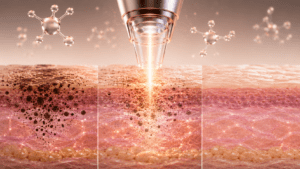
Not all acne scars are alike.
In fact, most patients have multiple scar types on the same face.
Common examples include:
- Ice-pick scars.
- Boxcar scars.
- Rolling scars.
- Atrophic scars.
- Post-acne pigmentation.
- Each behaves differently.
Each responds differently to treatment.
This is why a treatment that works beautifully for one person may produce only modest improvement in another the scar type often determines the treatment strategy.
The Biggest Challenge in Indian Skin: Pigmentation
One of the main concerns during acne scar treatment in Indian skin is post-inflammatory hyperpigmentation.
In simple terms, the skin may temporarily become darker after inflammation or procedures this does not mean the treatment has failed it means the skin is responding to the healing process however, it highlights why aggressive treatments are not always the best choice the safest treatment is not necessarily the strongest treatment.
Often, the most effective approach balances improvement with safety.
Patience frequently produces better long-term outcomes than aggressive intervention.
Why Combination Treatments Often Work Best
Patients often ask:
- “Which is the best treatment for acne scars?”
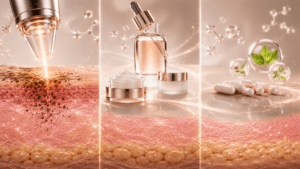
The honest answer is that there is rarely one best treatment acne scars are usually multifactorial different scar types often require different approaches.
A dermatologist may combine techniques such as:
- Subcision.
- Microneedling.
- Radiofrequency microneedling.
- Fractional laser treatments.
- Chemical peels.
- Regenerative therapies.
- Pigmentation management.
Each treatment addresses a different aspect of the problem.
Together, they often achieve better outcomes than any single procedure alone.
The Role of Collagen Remodelling
Most modern acne scar treatments have one goal in common.
- Collagen stimulation.
- Collagen acts as the skin’s support structure.
When acne damages collagen, depressions and scars may form.
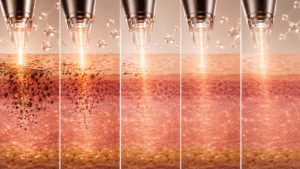
Many procedures work by encouraging the body to produce new collagen over time.
- This helps improve skin texture gradually.
- The important word is gradually.
Collagen remodelling is a biological process.
It takes weeks sometimes months.
This is why acne scar improvement often occurs progressively rather than immediately.
Why Social Media Creates Unrealistic Expectations
Social media is full of dramatic before-and-after photographs many make acne scar treatment appear quick and effortless reality is often different meaningful improvement is possible but significant acne scars usually require time, multiple sessions, and realistic expectations most patients do not need perfection.
- They want smoother skin.
- Better confidence.
- Less visibility of scars.
And fortunately, those goals are often achievable with the right approach.
The Emotional Impact of Acne Scars
As dermatologists, we often see something that cameras don’t capture the emotional burden many patients tell us they no longer notice their acne they notice the scars some have lived with them for years others avoid photographs or social events because of how they feel about their skin acne scars affect more than appearance they affect confidence self-esteem & sometimes the way people interact with the world around them.
This is why acne scar treatment is about more than aesthetics it is about helping people feel comfortable in their skin again.
A Final Thought
Treating acne scars in Indian skin requires more than simply choosing a procedure.
- It requires understanding scar types.
- Respecting skin biology.
- Managing pigmentation risks.
- creating a personalized treatment plan.
The good news is that modern dermatology offers more options than ever before while acne scars may not disappear overnight, meaningful improvement is often possible & perhaps the most important thing to remember is this:
- Your scars tell a story of what your skin has been through.
- But they do not have to define how you feel about yourself.
- Because confidence is not about having perfect skin.
- It is about feeling comfortable in the skin you have.