
One of the most confusing situations for patients experiencing hair loss is this:

- The hair fall is real.
- The thinning is visible.
- The density has clearly reduced.
Yet the blood reports come back completely normal.
- No major abnormalities.
- No obvious deficiencies.
- No alarming numbers.
And naturally, the question arises:
- “If my blood tests are normal, why is my hair still falling?”
As dermatologists, we hear this question surprisingly often many patients expect blood tests to provide a simple explanation for their hair loss sometimes they do but sometimes the story is more complicated because normal blood reports do not always mean the body is functioning optimally for hair growth and understanding that difference is important.
Hair Follicles Are Extremely Sensitive
Hair follicles are among the most active structures in the human body.
- They continuously produce new hair fibers.
- They require energy.
- Protein.
- Oxygen.
- Micronutrients.
- Hormonal balance.
- Healthy blood circulation.
- Favorable scalp environment.
Even small disruptions can affect the hair growth cycle this sensitivity is one reason why hair often responds to internal changes before other parts of the body in many ways, hair acts like an early warning system when something is slightly off, hair follicles may notice before you do.
What Does “Normal” Actually Mean?
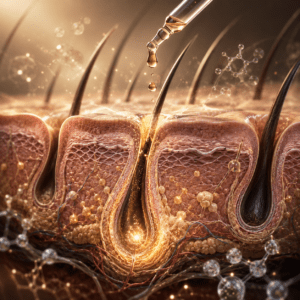
This is where many misunderstandings begin when a laboratory report says “normal,” it usually means the result falls within a statistically accepted reference range but reference ranges are designed to identify disease they are not always designed to identify ideal conditions for hair growth think of it this way.
A fuel gauge showing 15% fuel is technically not empty the car will still run but it is not operating with a comfortable reserve.
Similarly, some nutrient levels may technically fall within the normal range while still being less than ideal for optimal hair health this does not mean the laboratory is wrong it simply means that “normal” and “optimal” are not always the same thing.
The Ferritin Example
Ferritin is one of the most commonly discussed examples ferritin measures the body’s stored iron many patients have ferritin levels that fall within the laboratory reference range yet some studies and clinical observations suggest that certain individuals experiencing hair shedding may benefit from having higher iron stores.
- The important point is not chasing a specific number.
- The important point is understanding that hair follicles can be sensitive to subtle nutritional changes.
A result may be technically normal while still providing valuable clinical information when interpreted in the context of symptoms.
Vitamin D and Hair Loss
Vitamin D is another common example many people today have levels that sit near the lower end of the reference range.
Modern lifestyles often involve:
- Indoor work.
- Limited sunlight exposure.
- Long screen hours.
- Reduced outdoor activity.
A person may not have a severe deficiency yet their levels may still not be ideal research continues exploring the relationship between Vitamin D and various forms of hair loss.
While correcting Vitamin D alone rarely solves every hair problem, it often forms part of a broader treatment strategy.
The Nutrient That Was Never Tested
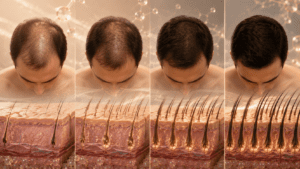
Another possibility is surprisingly simple the relevant nutrient may never have been tested many patients assume their routine blood work evaluates every important vitamin and mineral in reality, standard health check-ups often assess only a limited number of parameters hair growth depends on numerous nutrients, including:
- Iron.
- Vitamin D.
- Vitamin B12.
- Protein.
- Zinc.
- Folate.
And others.
Not every investigation includes all of these markers this is why a hair loss evaluation often differs from a routine health screening.
Hair Loss Is Not Always About Deficiencies

This is perhaps the most important point many patients become obsessed with finding a deficiency they assume that if they discover the missing vitamin, the hair loss problem will disappear unfortunately, hair biology is rarely that simple hair loss can occur despite perfectly normal nutritional status.
- Genetics.
- Hormones.
- Stress.
- Autoimmune conditions.
- Scalp inflammation.
- Certain medications.
- Recent illness.
- Rapid weight loss.
All can contribute to hair shedding in these situations, vitamin levels may be completely normal yet hair loss continues the problem is not what is missing the problem lies elsewhere.
The Impact of Stress
Stress deserves special attention.
Many patients experience significant hair shedding following:
- Examinations.
- Workplace pressure.
- Family difficulties.
- Major life events.
- Illness.
- Emotional trauma.
In these situations, blood reports often appear normal yet hair fall can still be dramatic.
Why?
Because stress influences hormones, inflammation, and the hair growth cycle itself.
- The follicles respond to physiological stress even when laboratory values remain within normal limits.
- The body remembers experiences that blood tests cannot always measure.
The Hair Growth Cycle Matters
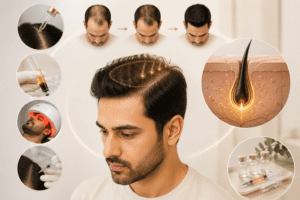
Hair loss does not always happen immediately after a trigger this often confuses patients.
For example, a person may experience severe stress in January the hair shedding may not begin until March or April by then, the stressful event feels distant blood tests performed during the shedding phase may appear completely normal yet the trigger has already affected the hair cycle this delayed response is one reason why diagnosis requires more than laboratory reports alone.
Why Diagnosis Is Bigger Than Blood Work
Good hair loss assessment is part science and part detective work blood tests provide valuable clues but they rarely tell the entire story a dermatologist also considers:
- The pattern of hair loss.
- The duration of symptoms.
- Family history.
- Recent illnesses.
- Medications.
- Lifestyle.
- Nutrition.
- Stress levels.
- Scalp examination findings.
Together, these pieces create a more complete picture.
- The goal is not simply identifying abnormal numbers.
- The goal is understanding why the hair is behaving differently.
Beware of Self-Prescribing Supplements
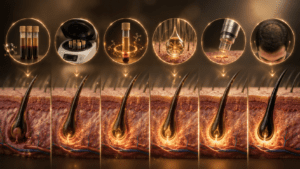
One common mistake patients make after reading about deficiencies is starting multiple supplements without guidance.
- Iron.
- Biotin.
- Vitamin D.
- Zinc.
- Collagen.
- Multivitamins.
Often all at the same time.
More is not always better excessive supplementation can sometimes create new problems rather than solving existing ones the objective should be correcting genuine deficiencies—not taking every supplement available in the hope that one works.
A Final Thought
If your blood tests are normal but your hair is still falling, do not assume the problem is imaginary and do not assume the tests are useless hair loss is often more complex than a single laboratory value.
- Sometimes the answer lies in subtle nutritional issues.
- Sometimes it lies in hormones.
- Sometimes it lies in stress.
- Sometimes it lies in the natural biology of hair loss itself.
Normal blood reports are reassuring but they are not always the end of the investigation because healthy hair depends on far more than a few numbers on a laboratory report.