
For many people, acne is supposed to end when the pimples disappear but that is often not how the story goes.
- The active acne settles.
- The redness improves.
- The breakouts become less frequent.
Yet every time they look in the mirror, they are reminded of what acne left behind.
- Small depressions in the skin.
- Uneven texture.
- Tiny pits that catch the light.
- Deeper scars that makeup cannot fully hide.
And one question that patients frequently ask is:
“Doctor, why can’t I just do one treatment and remove all my acne scars?”
It is a fair question , After all, we live in a world where we expect quick results.
- One tablet for a headache.
- One haircut for a new look.
- One service for a problem.
Unfortunately, acne scars don’t work that way and understanding why requires understanding what acne scars actually are.
Acne Scars Are Not Just Surface Marks

Many people think acne scars sit on the top layer of the skin.
In reality, most scars extend much deeper, when severe inflammation occurs during acne, the skin’s normal healing process can become disrupted , Collagen is damaged , Support structures beneath the skin are lost , the body repairs the area, but the repair is not always perfect , the result is a scar.
In simple terms, acne scars are not stains on the skin.
They are structural changes within the skin , This is why creams alone often struggle to improve significant scarring.
- The challenge is not simply improving skin color.
- The challenge is rebuilding damaged skin architecture.
Not All Acne Scars Are The Same
One of the biggest reasons multiple treatments are often required is that acne scars come in different forms.
- Some scars are narrow and deep.
- Others are broad and shallow.
- Some are tethered beneath the skin.
- Others are caused by volume loss.
In dermatology, we commonly see:
- Ice-pick scars.
- Boxcar scars.
- Rolling scars.
- Atrophic scars.
- Post-acne pigmentation.
Many patients have a combination of several scar types at the same time.
This creates a unique challenge :
- A treatment that works exceptionally well for one scar type may be less effective for another
- This is why acne scar treatment is rarely a “one-treatment-fits-all” process.
Imagine Repairing A Damaged Building
Think of acne scars like damage to a building.
- One section may need repainting.
- Another may require plaster repair.
- A third may need structural reinforcement.
You would not expect one tool to fix every type of damage , the same principle applies to acne scars different scar patterns often require different treatment approaches.
The goal is to address each layer of the problem rather than applying a single solution to everything.
Collagen Remodelling Takes Time
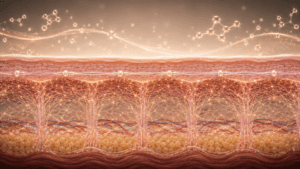
Many modern acne scar treatments work by stimulating collagen production.
This includes procedures such as:
- Microneedling.
- Fractional laser treatments.
- Radiofrequency microneedling.
- Subcision.
- Certain regenerative treatments.
However, collagen cannot be rebuilt overnight.
The body needs time , after treatment, the skin begins a biological repair process.
- new collagen fibers gradually develop.
- Existing collagen reorganizes.
- Skin structure slowly improves.
This process often continues for weeks or even months after a procedure , the improvement is real but it is gradual this is why multiple sessions are often recommended , Each session builds upon the progress of the previous one.
Some Scars Are Tethered Beneath The Skin
Many patients are surprised to learn that some acne scars are physically attached to deeper tissues.
These are commonly known as rolling scars.
Fibrous bands pull the skin downward, creating depressions.
In these cases, simply resurfacing the skin may not provide adequate improvement.
The tethering beneath the skin often needs to be released.
This is one reason why procedures such as subcision are frequently combined with other treatments.
- The goal is not just improving the surface.
- The goal is correcting the deeper cause of the scar.
Skin Type Also Matters
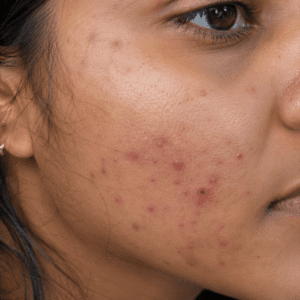
Not all skin behaves the same way.
Indian skin, for example, tends to heal differently than lighter skin types , it may be more prone to post-inflammatory pigmentation , some aggressive treatments may carry greater risks , because of this, treatment plans often need to be customized , sometimes a slower, safer approach produces better long-term results than an aggressive single procedure , patience often becomes part of the treatment process.
The Myth Of “100% Scar Removal”
One of the biggest misconceptions surrounding acne scar treatment is the belief that scars can always be completely erased.
The truth is that acne scar treatment is usually about improvement, not perfection , modern dermatology can achieve remarkable results.
Many patients experience significant smoothing of the skin:
- Improved texture.
- Reduced depth of scars.
- Better skin confidence.
But realistic expectations are important , the goal is often making scars less visible rather than making them disappear completely , ironically, patients who understand this from the beginning are often happier with their outcomes.
Why Combination Treatments Often Work Better
Imagine trying to build a house using only a hammer.
No matter how good the hammer is, it cannot perform every task , the same concept applies to acne scar treatment.
A dermatologist may recommend a combination of techniques because each one addresses a different aspect of scarring.
- One treatment may release tethered scars.
- Another may stimulate collagen.
- A third may improve texture.
- A fourth may address pigmentation.
Together, they often produce better results than any single treatment alone , this is why personalized treatment plans are so important.
The Emotional Side Of Acne Scars
Acne scars affect more than skin , they often affect confidence , many patients tell us they avoid photographs , they feel self-conscious during conversations , they become overly focused on their appearance in mirrors , some have carried the emotional impact of acne for years after the acne itself disappeared.
This is why acne scar treatment is not simply about aesthetics.
For many people, it is about feeling comfortable in their own skin again and that journey deserves patience.
A Final Thought
If you’ve ever wondered why acne scars often require multiple treatments, the answer is simple:
- Because scars are complex.
- They exist at different depths.
- They come in different forms.
- They heal at different rates.
- Every person’s skin responds differently.
Successful acne scar treatment is rarely about finding one miracle procedure.
It is about understanding the type of scars present, choosing the right combination of treatments, and allowing the skin time to rebuild itself because healing is not always instant , but when approached correctly, improvement is often possible and sometimes, the most important transformation isn’t just smoother skin.